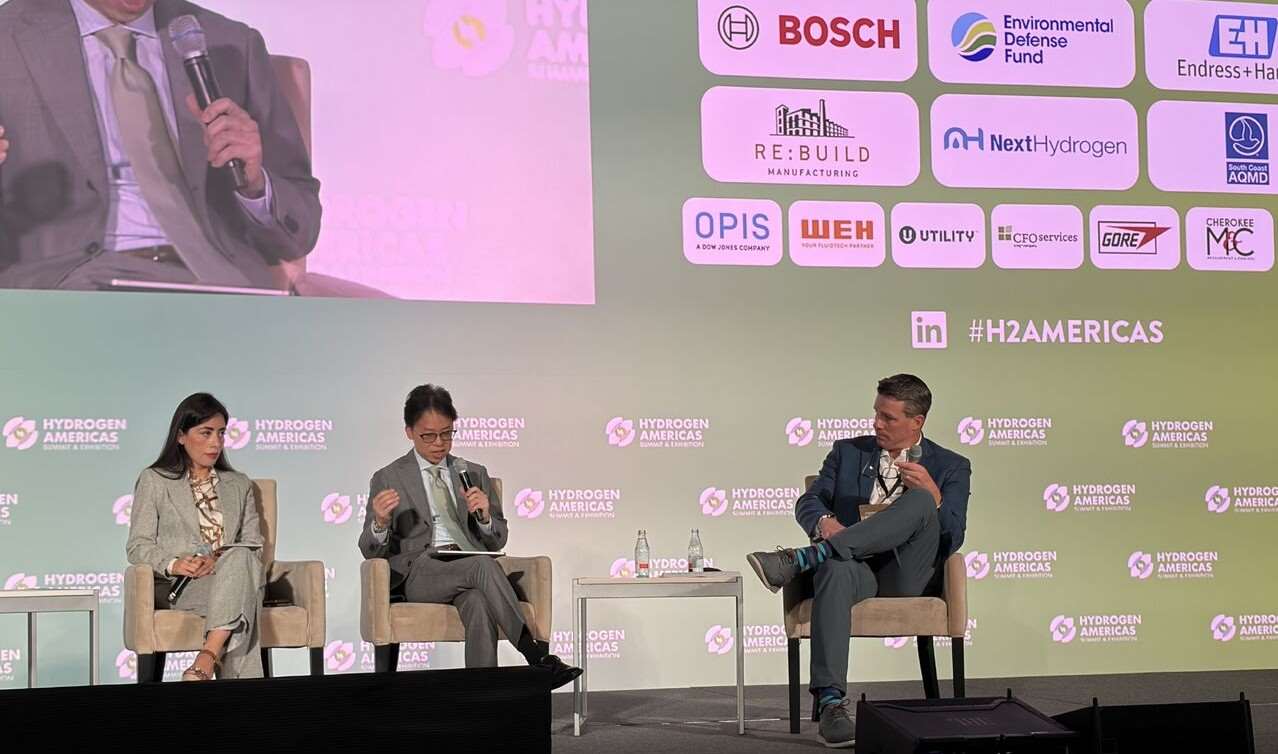
Observations from the Hydrogen Americas Summit
It was nice to see old friends and meet with new ones. Here are my observations from the Hydrogen Americas Summit in Houston, October 6-7, 2026. The optimism of early clean hydrogen gatherings has given way to industrial pragmatism. Over two days, executives, financiers, and policy advisers kept returning to the same point: speculative greenfield mega-projects are being shelved in favor of fast, commercially viable, localized infrastructure.
Two forces shaped almost every conversation:
- The 45V clock. Projects must begin construction before January 1, 2028, to qualify for up to $3.00/kg in clean hydrogen production tax credits. With roughly 450 days left, capital is moving to the U.S. Gulf Coast, where existing pipelines, salt caverns and export docks lower execution risk.
- The AI power race. Data center developers are asking utilities one question: “When can you give me service?” Sites of 1 to 2 GW want power in 12 to 18 months, faster than the grid can expand. The bridge taking shape is behind-the-meter natural gas paired with fuel cells, with hydrogen blending along the way.
Other points that stayed with me: Offtake is the real shortage. As Jason Morker of Electric Hydrogen put it, what makes a project bankable is stable, long-term cash flow. Electricity is about two-thirds of the cost of green hydrogen, so projects need power below $0.04/kWh. In steel, converting blast furnace off-gas into hydrogen can cut emissions without leaning on the grid. In transport, biofuels lead in the near term, while e-fuels lag and feedstock limits approach by 2035. Dr. Tian Yi of EDF offered a valuable reminder: a hydrogen label does not make a molecule clean. Methane leaks, fugitive hydrogen, and combustion emissions all count. Waste-to-fuel deserves more attention. NYSERDA is directing more than $40 million into hydrogen and low-carbon fuels.
My takeaway: the winners of the next five years will not be the largest projects on paper. They will be the ones that secure firm offtake, co-locate with low-cost resources, and solve real power bottlenecks.
Thank you to the organizers and to everyone who shared their insights in Houston.
Ayfer Veziroglu, PhD
President, IAHE
Also published at: https://lnkd.in/p/eqUMDcY7